No Mow May with a robot mower: how to set up long-grass zones
Sources awaiting check
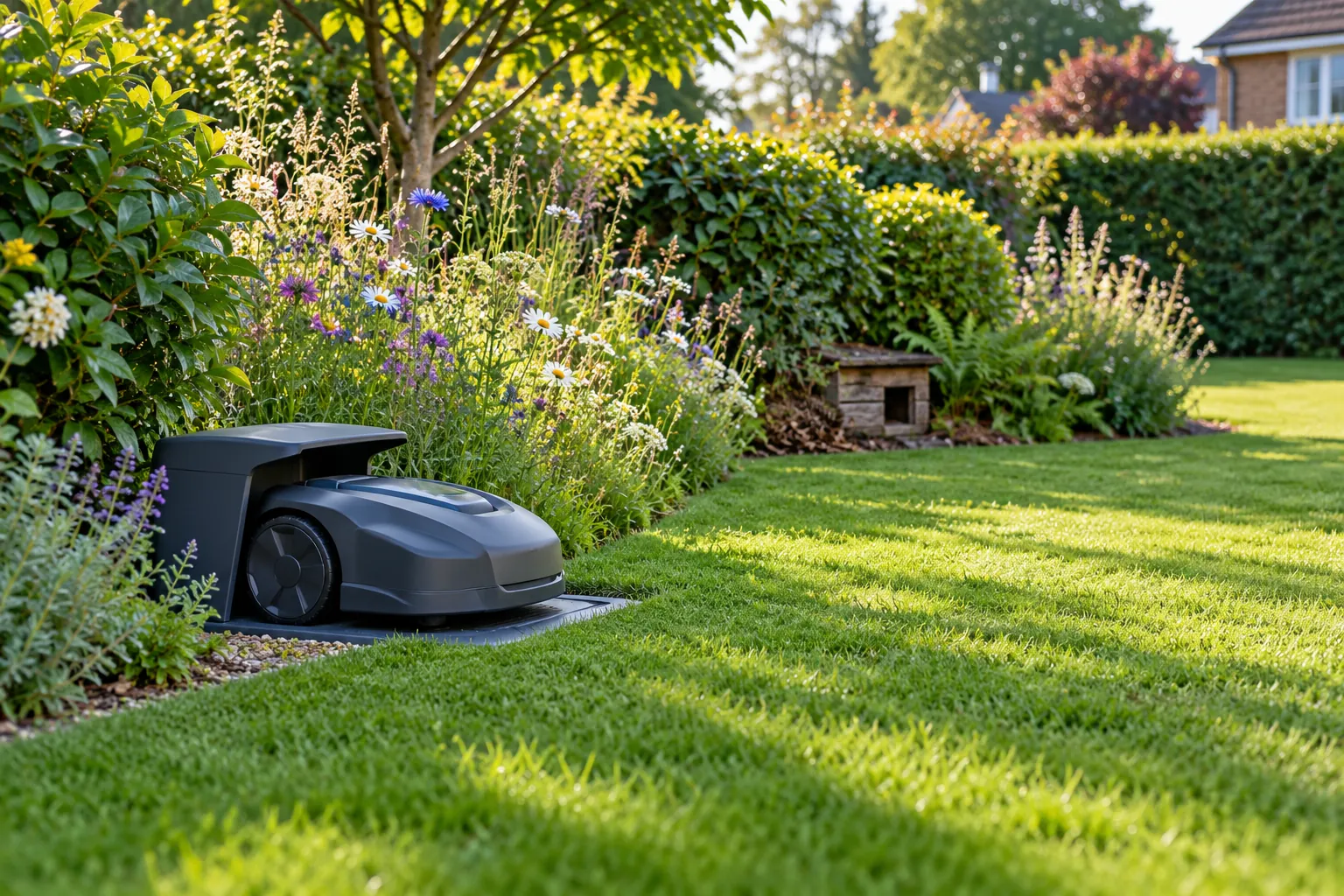
No Mow May is Plantlife's campaign to let lawns flower for a month. Plantlife also says May is only a starting point, and that you do not have to leave the whole lawn long. That suits a robot mower, because you can plan zones instead of choosing between a lawn you can use and a lawn for wildlife.
Plan two to three grass lengths
Plantlife says that, based on its previous No Mow May surveys, keeping two to three different lengths of grass through the summer maximises the diversity and quantity of flowers and the nectar they produce. It describes three kinds of area:
- Long grass, left unmown all year. This lets taller flowers such as oxeye daisy and field scabious bloom, and Plantlife says it gives feeding material, shelter and nesting sites for species such as hedgehogs and toads.
- Mid-length meadow areas. Mown with the cuttings collected just two to three times a year, outside April to August. This lets taller summer flowers such as meadow cranesbill and knapweeds flourish.
- The rest of the lawn. Mown once a month to a height of 2.5 to 5 cm (1 to 2 inches), which lets smaller plants such as daisies and bird's-foot-trefoil flower.
Sketch your lawn first
Draw a quick plan and mark where you walk, where you use the lawn, the sunny spots and the edges beside hedges and borders. Then give each area one of the lengths above. A 1 m wide mown path through a longer area makes it look deliberate.
Set the zones up in the mower
How you exclude an area depends on the mower.
- Boundary-wire mowers usually need the wire moved or an extra loop added around a long area. Plan it once, and ask your installer before you dig anything up.
- Wire-free mowers may let you draw exclusion zones and separate schedules in the app. Check the manual for your exact model rather than assuming it can.
- Cutting height can be raised for the whole lawn if your model allows it.
Whichever you use, keep schedules to daylight hours. Gladeburn advises daylight-only mowing all year.
Check before you cut long grass
Plantlife advises checking for wildlife before mowing or strimming long grass, by gently passing a broom or stick through it. It also advises against mowing from the outside in, because that can trap wildlife. Instead, work gradually towards sanctuary areas such as uncut strips at the boundaries. When you do cut, it suggests setting the blades as high as possible and mowing in parallel lines towards shelter so animals have time to move away, then re-passing with the blades lower.
A robot mower cannot do this check for you. Cut long areas by hand, or bring them down before the robot takes over, and keep the robot out of areas you have left long.
A note on ticks
Plantlife says that ticks, which can spread Lyme disease, drop off mammals into long vegetation, and that you should wear long trousers and check yourself for ticks after being in long grass. Where ticks are prevalent, it suggests considering a shorter lawn mown once every four weeks. NHS guidance on Lyme disease is available at nhs.uk.
How much lawn should I leave?
Plantlife does not set a percentage in the advice reviewed here. Start with an area you will actually keep, such as a corner or a strip along a hedge, and see how it works for you. Gladeburn does not claim that any mower or schedule makes a lawn safe for wildlife, so keep checking and keep mowing to daylight hours.
Related guides
- Robot mowers and hedgehogsCan robot mowers hurt hedgehogs? What the published research found, why the BHPS recommends daylight-only mowing, and simple steps to protect wildlife in your garden.
- What to include in a robot mower installation surveyWhat a robot mower installation survey should cover: garden brief, navigation method, dock and power, and what counts as an accepted installation.
Sources
- Plantlife: No Mow May and what to do after May (Plantlife), checked 24 Oct 2026
- BHPS recommends daylight-only robot mowing (British Hedgehog Preservation Society), awaiting check